


Knowing how to plan a corporate event means balancing business objectives and attendee expectations, all while making sure operations run smoothly. Without a structured process, teams can spend heavily on an event that runs well but fails to produce a meaningful result.
In short? To plan a successful corporate event, make sure tasks are assigned, follow up with suppliers, and always have a backup plan.
At Fever we've worked on more than 2,000 corporate events across 55+ countries. That's why we put together a short guide on how to plan yours in an effective and lasting way.
This guide on how to plan a corporate event covers the 10 steps required to move from an initial brief to event-day delivery. If you’re struggling to find a footing for your next corporate event, start here.
| TABLE OF CONTENTS |
What, exactly, is a corporate event?
A corporate event is the result of designing, organizing, and delivering an event for a company, its employees, clients, partners, or other stakeholders.
Unlike a private social event, a corporate event should support a defined business objective. That might be increasing employee engagement, strengthening a client relationship, launching a product, or bringing a distributed team together.
The process typically includes budgeting, venue sourcing, supplier coordination, guest management, production, and post-event measurement. The complexity depends on a number of things: attendees, what level of customization you require, and how many suppliers are involved.

Common types of corporate events
Corporate events can take many forms, including:
-
Employee appreciation events
-
Team-building activities
-
Client entertainment
- Product launches and brand activations
- Sales kickoffs
-
Conferences and networking events
-
Executive retreats
-
Institutional anniversaries
-
Cultural celebrations
-
Corporate hospitality events
The right format depends on the intended audience and business result. For example, an employee engagement event will likely require a closed-door experience, but a product launch may involve an entire branded production or even dedicated press.
Why should you organize a corporate event?
The corporate events market is booming. In the U.S. alone, the market size of meetings and conferences (MICE, concretely) by 2030 is expected to reach $176 billion dollars.
Many things are driving this investment. For one, digital noise has made in-person attention the rarest commodity of all. The boost of in-person experiences, especially in B2C, is now being mirrored in the B2B world.
Additionally, employee engagement has seen a decline since 2020, with only 31% reporting being actively engaged at work.
These reasons give corporate events a unique advantage for improving company morale, engaging with clients or stakeholders, and lending a special credibility that many brands struggle to achieve.
How to plan a corporate event in 10 steps

1. Define the event’s business objective
Start by identifying the result the event should produce. Avoid beginning with a venue, theme, or activity before agreeing on the objective.
A primary objective might be to:
- Reward employees
- Improve team engagement
- Retain an important client
- Generate qualified leads
- Introduce a new product
- Strengthen partner relationships
Turn the objective into measurable indicators.
For instance, a Candlelight concert can boost employee engagement by moving beyond traditional corporate formats that may feel generic and repetitive, while simultaneously strengthening company culture and reinforce employer brand.

2. Identify the audience
Who exactly should attend your event and why? This is the next thing you should map out.
Consider job roles, seniority, and location. An event for employees will require a different tone and program from an evening designed for clients or investors.
Estimate attendance early, but plan for changes. Your expected headcount will affect the venue, catering, staffing, security, and overall budget.
3. Set the corporate event budget
Set your ambitions in stone and bring them down to Earth. That’s to say you should create a complete budget before committing to suppliers.
Common cost categories include:
- Venue hire
- Entertainment
- Catering
- Audiovisual production
- Décor and branding
- Staffing and security
- Photography
- Guest transport
- Registration technology
Keep a contingency fund for unexpected costs. A reserve of approximately 10% can help cover attendee changes or any last-minute supplier or technical issue.
Rather than allocating equal amounts to every category, prioritize spending according to the business objective.
4. Select the right event format
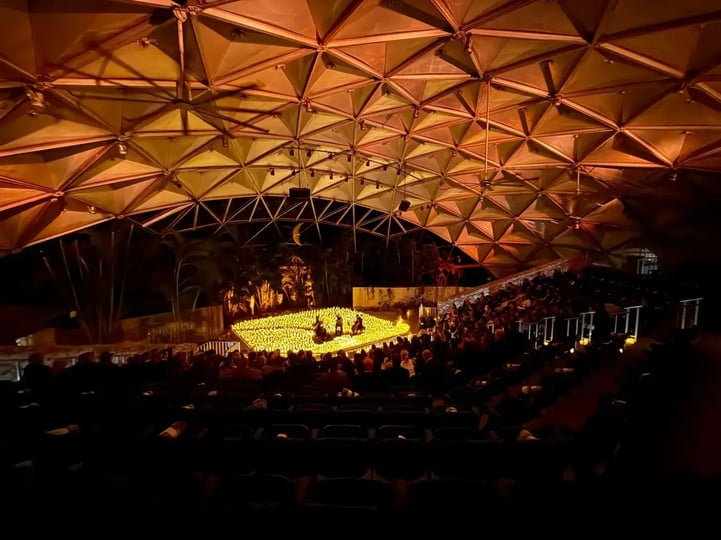
Candlelight® private event.
There are as many event formats as there are stars in the sky. Choose a format that supports the objective rather than simply filling time in the calendar.
The easiest way to narrow the field is to ask what should be different for your attendees when they leave. The answer usually points to one of a handful of core formats, like conferences and summits, workshops, product launches, networking events, team retreats, or live entertainment.
Free ebook: Fever's Corporate Events Playbook
Corporate events are no longer a marketing expense; they are a growth engine. They drive pipeline, accelerate deals, strengthen employer brands, and create high-impact brand moments.
We've put together a free ebook for leaders who want to deliver measurable impact with their corporate events.



5. Build a corporate event timeline
Work backward from the event date and assign an owner to every milestone.
Your timeline should include:
- Internal brief approval
- Budget confirmation
- Venue selection
- Supplier contracting
- Invitation launch
- RSVP deadline
- Catering confirmation
- Final headcount
- Technical checks
- Event-day briefing
A customized private event generally requires more planning time than a group booking at an existing experience.
For an event planned eight weeks in advance, the company could approve the brief in week one, hold the venue in week three, launch invitations in week four, confirm the menu in week six, and submit the final headcount one week before the event.
6. Choose the event venue
An event venue is more than appearance alone. You should always assess the venue’s operational capabilities as well.
Check its capacity, layout, accessibility, transport links, licensing, catering facilities, and technical infrastructure. Confirm whether it can accommodate entertainment, branded installations, guest registration, and the required flow between different parts of the program.
And last, but not least, don’t forget to review cancellation terms and backup arrangements.
7. Design the attendee experience
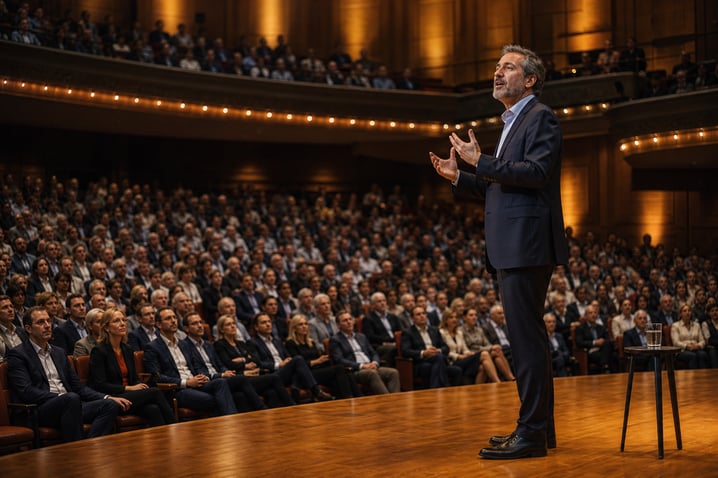
Put yourself in the attendee’s shoes. What do they see? What do they feel? Map every stage of the event from their perspective.
Consider:
- How guests receive and respond to the invitation
- What happens when they arrive
- How they check in
- How the main program begins
- Where networking or informal conversation takes place
- How the event ends
- What communication follows afterward
For the Candlelight example, employees could arrive at 6:30 p.m. for check-in and a welcome drink. Leadership remarks could begin at 7:00 p.m., followed by a 75-minute private concert and a reception.
Brand integration should feel relevant rather than intrusive. Appropriate touchpoints might include a welcome board or a personal thank-you message from the company.
8. Promote the event and manage attendance
You would not promote your next Candlelight event to its audience via fax. So use communication channels suited to your attendees.
An internal employee event might be promoted through email or Slack. On the other hand, a client event may require personal outreach from account teams and a more controlled registration process.
A professional event ticketing platform can help you set up the entire management flow of your event, including ticket delivery and communications.
A typical employee communication schedule could include a save-the-date four weeks before the event, a reminder two weeks before, and final practical information three days in advance.

9. Prepare the event-day plan
The day of the event should also be included in its planning. Create a detailed Run of Show document covering every important action that will take place during your event.
A Run of Show document is the minute-by-minute plan that keeps every person, cue, and element synchronized during the event, and that means everything is accounted for: supplier arrival times, guest arrival, speaker timings, video playback, entertainment cues, etc.
In the Run of Show you can also include contingency plans for technical problems, supplier delays, transport disruption, weather, or unexpected attendance changes.
10. Measure and analyze performance post-event
An event doesn’t end when the last guest leaves. The weeks that follow are when you find out whether it worked, and the answer depends on the objective you set at the start. A launch might be judged on leads generated, a networking evening on new relationships, an internal offsite on team feedback.
Gather your data while it’s fresh. Attendance and no-show rates, ticket or registration data, session engagement, and survey responses all give a quantitative picture. Pair them with qualitative feedback from attendees, speakers, and your own team.
Then compare the results against your original goals and budget to see what delivered value and what didn’t.
Turn your corporate event brief into a delivered experience
Every great corporate event follows the same arc. It begins with a single business objective and a format built to create an emotional peak, with production briefed from the audience back.
It continues with flawless execution: one accountable partner from brief to closing, rehearsals for every key moment, and backup plans for any kind, be it talent, weather, or tech. And it ends with proof, from sentiment and NPS, both within 24 hours and in the following days. Add to that the content, PR, and social value that must be captured live.
That is the way we approach every event at Fever. If you have an objective in mind, we can help you turn it into an experience your audience will remember, and show you the results afterwards. Request a free proposal to turn your corporate event brief into a tailored plan, from beginning to end.
Related articles
All articles →
Employee team building ideas that teams actually want
Employee team building ideas HR and event planners actually use, from immersive experiences to group outings, …
Corporate holiday party ideas that get teams excited for year's end
Corporate holiday party ideas beyond the standard office party, from private dining to full-service entertainm…