

A ticket presale is an exclusive sales window that lets a select group of buyers purchase tickets before they’re released to the general public.
For organizers, one of its immediate benefits is testing demand, allowing them to be in control of their own prices, inventory, marketing, and ticket offering based on those first results.
Plus, it lets them reward loyal fans, and bring in early revenue before general sale opens.
Let’s go over how presales create demand, which audiences to target, and how to run a ticket presale step by step.

TABLE OF CONTENTS
How to create demand for presale tickets
What audiences can you target with presale tickets?
How to make presales tickets work
Promote an influencer program for event ticketing
Create a loyal fan base for early bird tickets
Define your event pricing strategy
Create a CRM strategy for sharing updates
(For large events) Add a virtual queue
Examples of presale tickets by industry
Concerts and festivals presale tickets
Exhibitions and immersive experiences presale tickets
Run an event presale with Fever
How to create demand for presale tickets
A presale creates demand by turning interest into commitment before general sale.
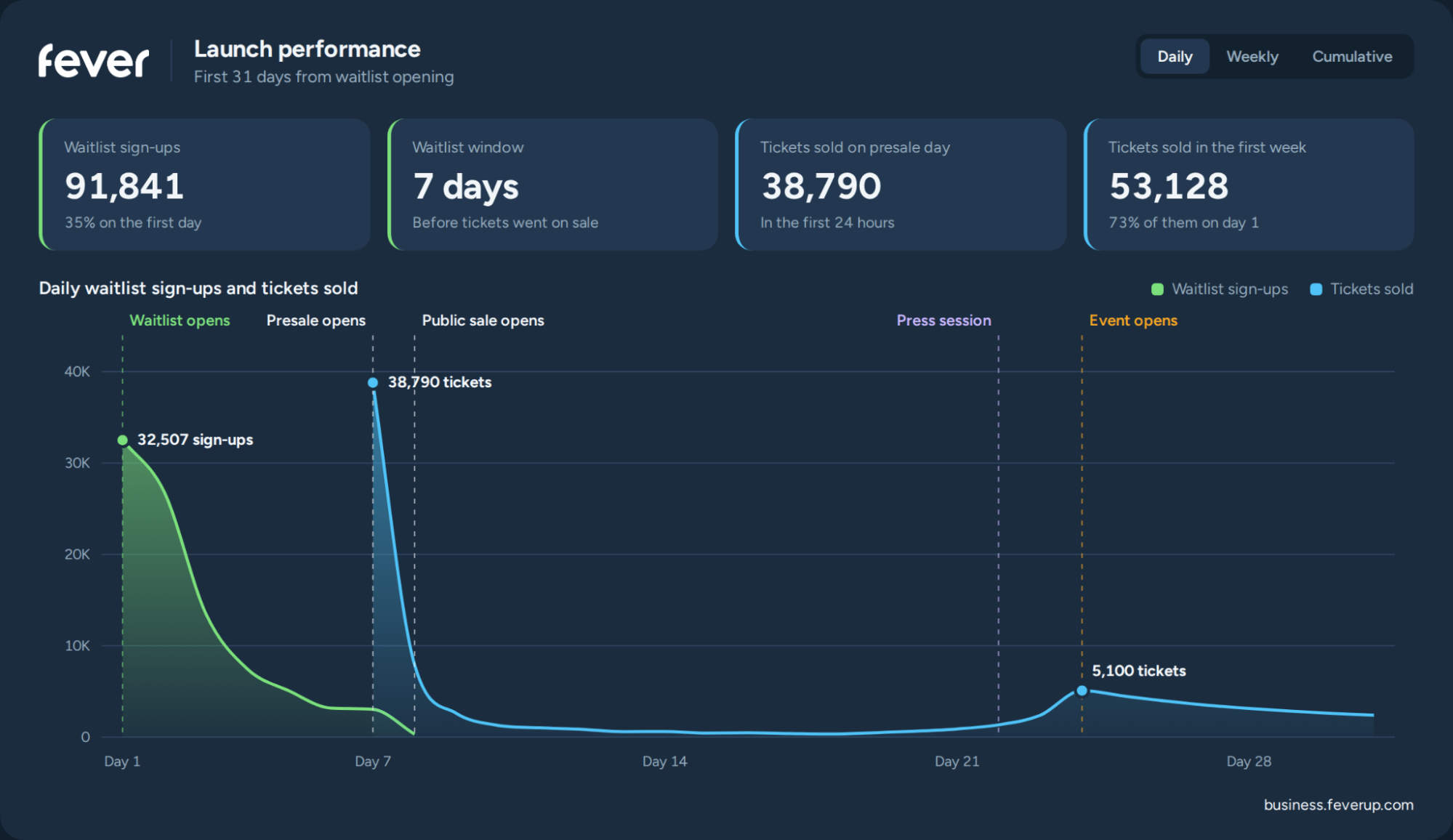 Based on real Fever launch data.
It works by gating early access behind a condition, such as a waitlist sign-up, a code, a membership or a partner relationship, with its own inventory cap and closing date.
Four levers do most of the work:
Waitlist campaign
Running a waitlist campaign is a gold mine for demand generation for your future presale period. It gives you enough data to inform how you’ll set up your presale campaign and ticket prices.
Urgency
Setting up opening and closing dates gives buyers a reason to decide now. Without both, early access is just an earlier version of general sale.
Other optional factors, like exclusive inventory or ticket types, can also create urgency for presales.
Exclusivity
Access limited to a defined group raises the perceived value of a ticket without changing its price. A dedicated sales page, a code, or a bundled perk can all signal that the access is earned.
Buzz
A presale gives the event an early news cycle. An announcement, a sold-out tier, a sales milestone, and press coverage each give you something to share before general sale.

What audiences can you target with presale tickets?
Numerous factors will determine your ideal presale audience, like event category, venue, marketing strategy, pricing, and demand.
That means that, while benchmarks exist, there's no universal percentage of the number of tickets you can expect to sell during the presale period. We recommend working back from the goal of each audience type, and record presale share of total sales for every event so you build your own benchmark for the future.
Here are some examples of audiences you can target with presale tickets:
Membership and loyalty segments
Members and past buyers know your brand and convert quickly, so they suit the earliest and largest segment. Per-transaction ticket limits keep that segment in the hands of genuine fans and reduce the risk of bulk buying for resale.
VIP and premium access segments
Premium buyers are less price-sensitive and value certainty of seat or hospitality, so opening a presale for that segment secures high-yield inventory.
Corporate and partner audiences
Sponsors, card issuers, employers, and media partners can bring a ready-made audience in exchange for early access.
They also represent an additional revenue stream, since sponsors tend to pay in order to offer presale tickets to their audience.
New contacts
Waitlist sign-ups and contacts from earlier campaigns have already signaled intent. Reach them first with a time-limited window, since they need a push and not a pitch.
Early access also works as an incentive in acquisition campaigns. Offering presale entry in exchange for a sign-up brings new contacts into your CRM before they have bought anything.
Fan and brand communities
Fan clubs, supporter groups, and creator and brand communities spread the sale through their own channels. Give each one its own code or link, so you can see which community converts.
How to make presale tickets work
A presale works when the access rule, the deadline, the price, and the follow-up messages are set before the sale opens.
The following tactics cover the sequence from capturing interest to closing the window.
Offer a waitlist
A waitlist captures interest before dates or prices are final, and leaves you with an owned audience for the first release.
It should always be implemented with a multichannel campaign (CRM, digital, PR, social media, influencers, etc.) that clearly states the benefits of joining the waitlist, all with a visible countdown and end date (more on that below).
Keep the waitlist window short: in most cases, 7 to 14 days is the sweet spot. It’s long enough for your campaign to build a solid list, but short enough to keep the sense of urgency alive before the presale opens.
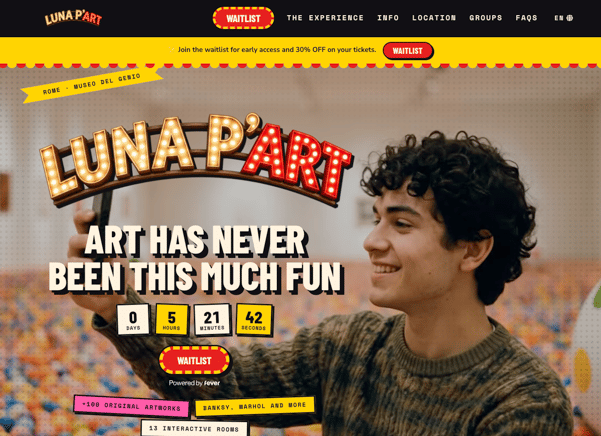
A waitlist phase can include these steps:
- Waitlist launch: the waitlist opens and a multichannel campaign promotes sign-ups, so interested people can register before tickets go on sale.
- Sign-up confirmation: an automated message confirms each person is on the list and reminds them of the benefit.
- Presale launch: a message across email, push notifications, text, and WhatApp announces that their early-access presale is open.
- Last call: a final reminder to waitlist members who haven’t bought yet, before the presale window closes and general sale begins.
With Fever, you can set up a waitlist page that fits your launch goals, confirm each sign-up, notify the list as soon as presales opens, and retarget non-buyers throughout the event’s lifecycle.
Promote an influencer program for event ticketing
Give creators and ambassadors a trackable code or link that opens the presale window, so every audience can be measured. Reward them on tickets sold and not on posts published, and brief them on the closing date.
Fever’s marketing ecosystem includes affiliates and ambassadors, so ticketing and promotion can sit in one place.

Implement countdown timers
A visible deadline on the listing and in every email turns a vague opportunity into a decision.
Set a closing date and time for each segment and hold it, because an extended deadline weakens the next one.
Scheduling your sales start and end times by ticket type makes the deadline automatic.
Create a loyal fan base for early bird tickets
Tie priority access to purchase history, so that anyone who bought your last event receives the presale link first.
Each sale then becomes the entry ticket to the next one and builds a segment you can reuse.
Memberships and season passes are the structured version of the same idea.
Define your event pricing strategy
Presale tickets are not automatically cheaper. They are typically sold at the same face value as general sale, with early access as the reward, while other organizers apply an early bird price.
A tiered structure for your event pricing strategy, where each ticket type costs slightly more than the last, rewards early buyers and pulls demand forward.
Create a CRM strategy for sharing updates
Decide in advance what you will send, to whom and when: the announcement, the presale opening, a last-call reminder, the general sale launch, and a post-launch reminder to non-buyers after a certain amount of days.
Segment so that waitlist members, past buyers, and partner audiences each get their own sequence.
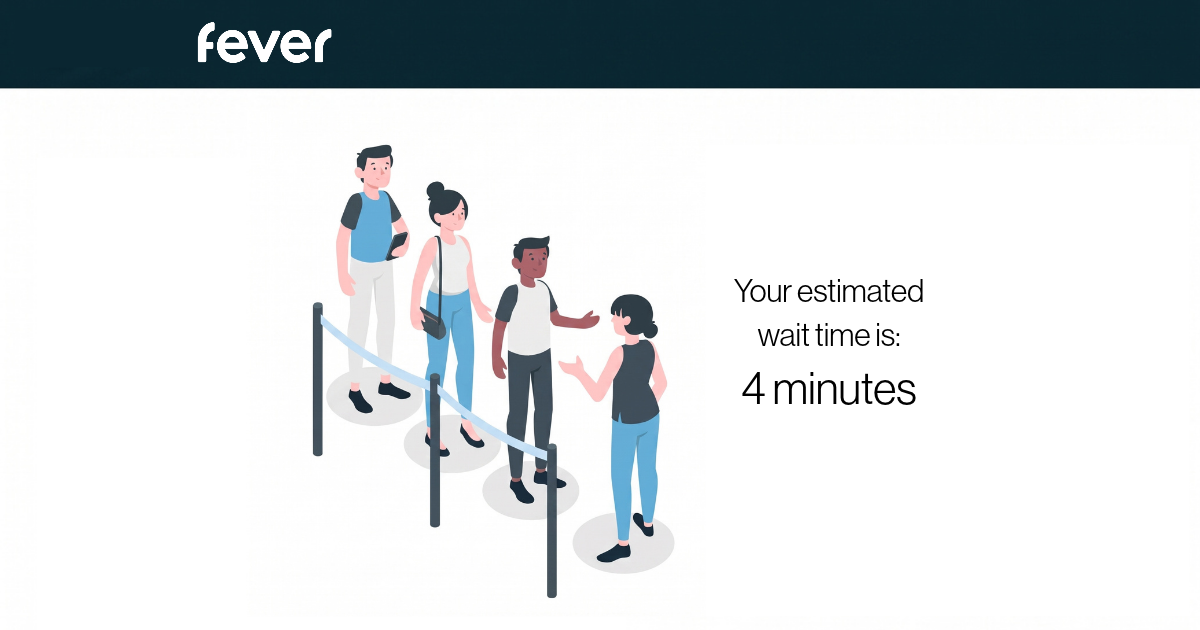
(For large events) Add a virtual queue
For bigger presales, like a music festival or a sports event, adding a virtual queue is incredibly useful, since it serves a dual purpose:
- It naturally creates urgency.
- It ensures there’s smooth, controlled traffic to your ticketing page, avoiding huge traffic peaks.
Examples of presale tickets by industry
Presale patterns differ by sector, from staged access in sports to early bird segments at festivals.
Sports presale tickets
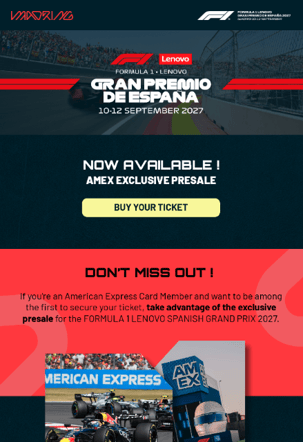
For the FORMULA 1 TAG HEUER GRAN PREMIO DE ESPAÑA 2026 in Madrid, Fever partnered with MADRING to provide ticketing technology, demand generation, and fan experiences. Ticket presales played a key role in the event’s commercial strategy, contributing to its success in attracting over 352,000 attendees.
In fact, before sales opened for 2027’s edition, fans were encouraged to join a waitlist, and additionally, American Express cardmembers had priority access.
Concerts and festivals presale tickets
Festival sales cycles tend to be long, which makes early bird segments a natural fit.
A common setup is a waitlist that feeds an early bird release, with a rule that opens the next tier when early bird stock falls below a set number.
Fever’s ticket rules apply this switch automatically, so nobody has to manually keep track of inventory.
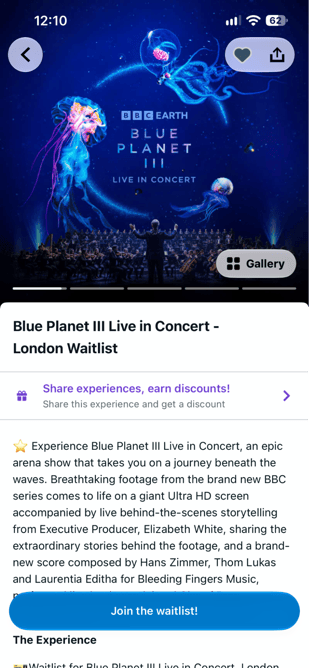
Exhibitions and immersive experiences presale tickets
Immersive experiences are more nuanced in their appeal to specific demographics, as opposed to festivals or major sporting events. Waitlist sign-ups can give a first read of local demand before the full campaign starts.
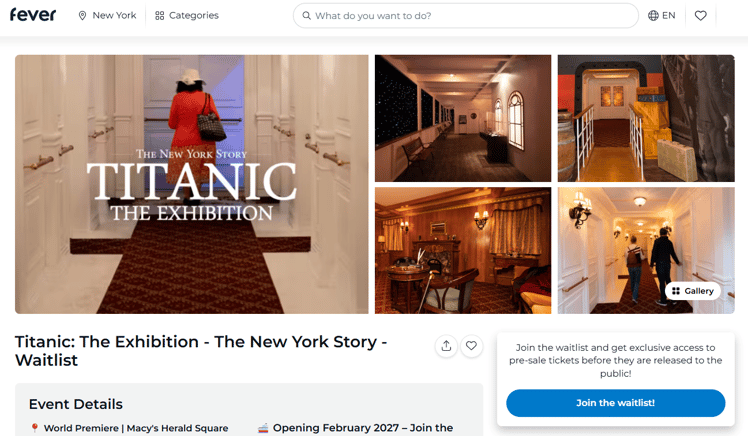
A presale pays off when its goal, audience, deadline and pricing are settled before the sale opens. If you are planning one, explore Fever’s event creation and ticket sales solution or book a demo with the team to see how waitlists, ticket rules, and CRM flows fit your launch.
Run an event presale with Fever
Fever combines ticketing technology with demand generation, so a presale can be configured and promoted in the same system. You can run waitlists, schedule ticket types by sales window, cap tickets per transaction, and release inventory in tiers.
Fever can also create the campaign assets and run, manage, and optimize 360 marketing campaigns, reaching audiences beyond your own channels through Fever’s ecosystem, which includes:
- The most influential and trusted global network for live entertainment, Secret Media Network
- A consumer-first marketplace
- Affiliate and brand ambassador networks
- CRM communications (email, text, WhatsApp, and push notifications)